
Couple Planner vs. Shared Google Calendar: Which Is Actually Better?
When couples first decide to share a calendar, Google Calendar is usually the default choice. It's free, it's familiar, and it mostly works. But "mostly works" and "actually designed for couples" are two very different things. Here's an honest comparison of using a generic shared calendar versus a dedicated couple planner.
Where Google Calendar Does Fine
Let's give credit where it's due. Google Calendar handles basic shared scheduling well:
- Event creation: Both partners can add and edit events
- Color coding: You can assign colors to differentiate who's doing what
- Reminders: Standard notification support
- Integration: Works with most apps and devices out of the box
For couples who just need to avoid scheduling conflicts, this might be enough. But most couples need more than logistics.
Where a Couple Planner Goes Further
A dedicated couple planner understands that a relationship isn't a project to manage—it's a connection to nurture. Here's what you get beyond basic scheduling:
- Mutual free time detection: Automatically highlights when you're both available instead of making you manually compare calendars
- Date suggestions: AI-powered ideas based on your preferences, location, and budget
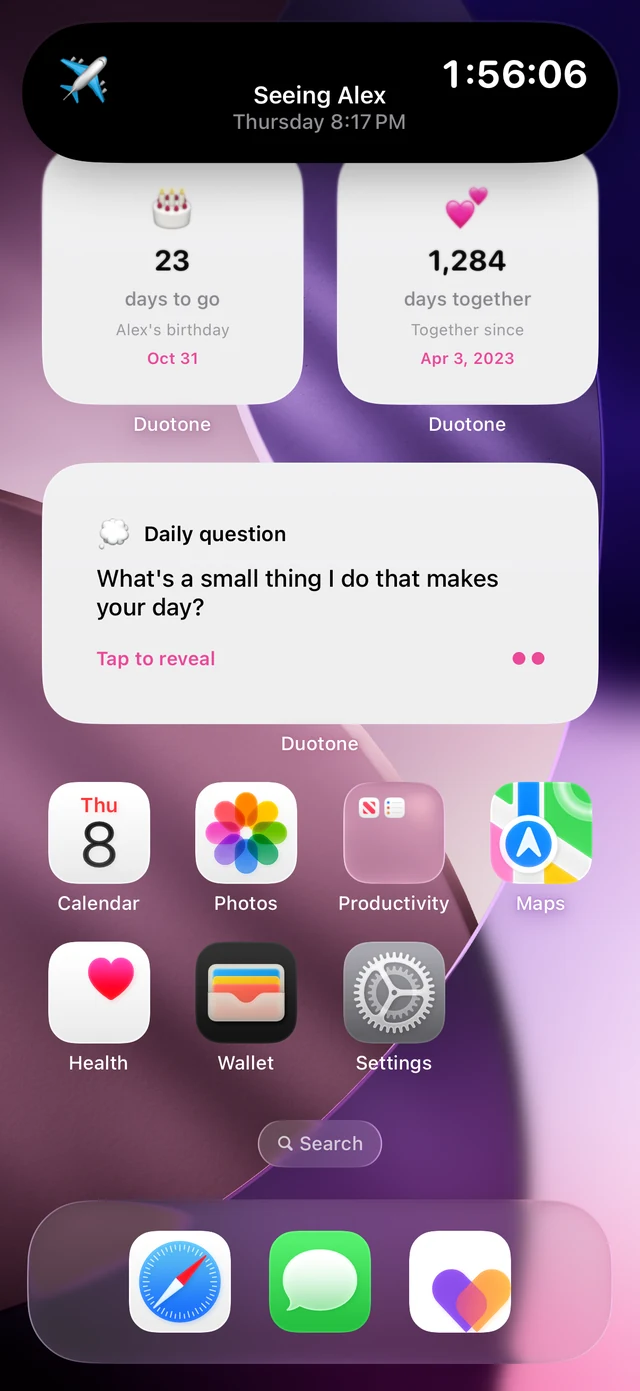
- Anniversary and milestone tracking: Built-in reminders with advance notice, not just day-of pings
- Relationship rituals: Schedule and track recurring couple activities with streak tracking
- Guided sessions: Structured conversations and check-ins built right into your planning flow
The "Good Enough" Trap
Google Calendar doesn't encourage you to prioritize your relationship. It treats your date night the same as your dentist appointment. A couple planner, on the other hand, is intentionally designed to make relationship time visible, protected, and celebrated. That subtle difference in design philosophy changes behavior over time.
Privacy Matters Too
With Google Calendar, your shared calendar lives inside an ecosystem that also holds your work emails, documents, and everything else. A dedicated couple planner creates a private space just for your relationship—separate from work, separate from the rest of your digital life.
The Verdict
Google Calendar is a great tool. But it's a general-purpose tool being asked to do a specific job. If you're serious about making your relationship a priority—not just avoiding schedule conflicts—a couple planner is worth the switch.
Upgrade from "Good Enough" with Duotone
Duotone goes beyond shared scheduling. It finds your free time, suggests dates, tracks milestones, and helps you build connection habits—all in one private space for your relationship.